FitLife: a diabetes-aware AI fitness platform with personalised meal and workout plans
A bespoke Next.js fitness application engineered around diabetes management. Anthropic Claude generates personalised meal and workout plans in seconds; glucose and insulin tracking, consultation-notes parsing, and a member community surround the core engine.
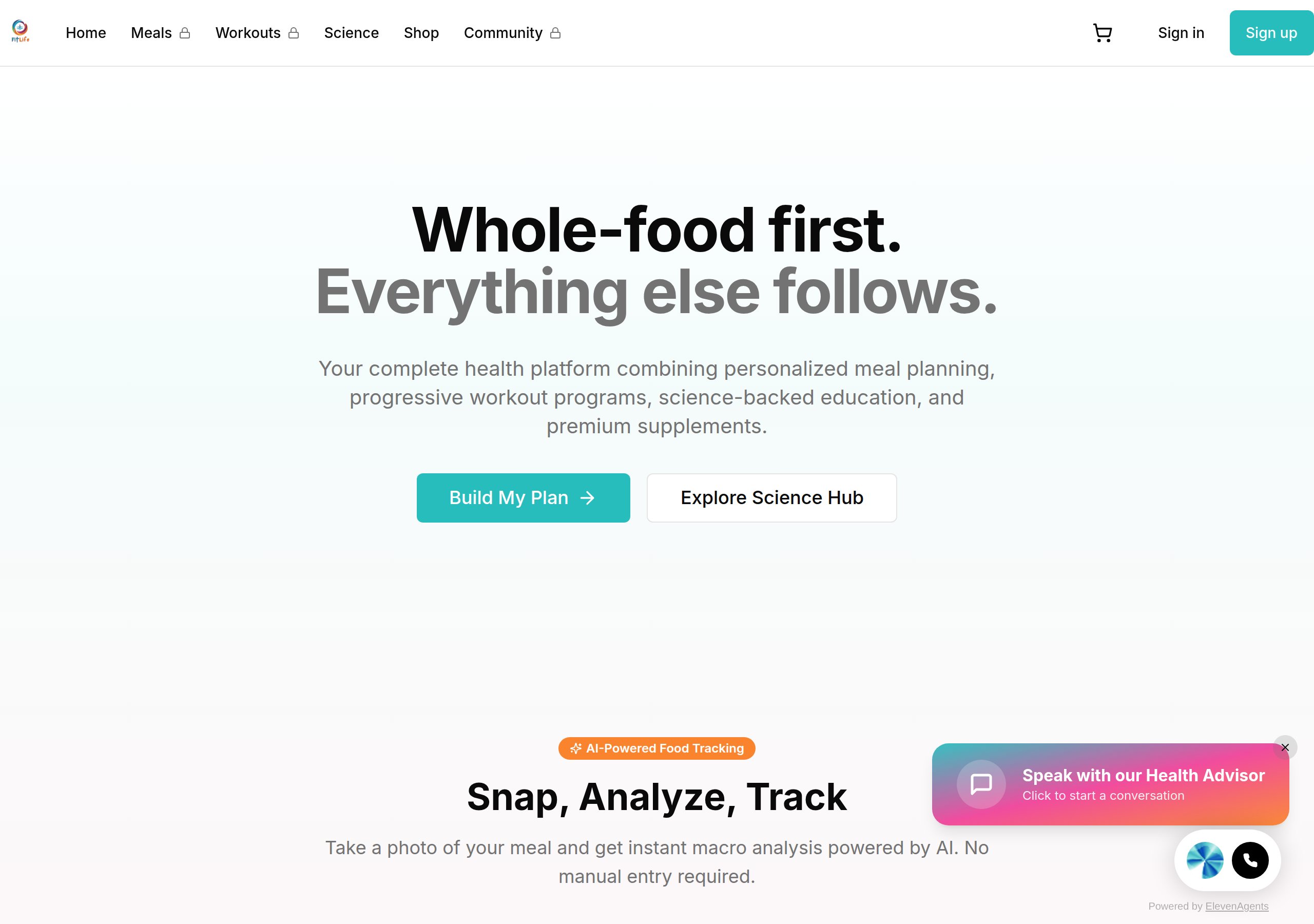
Labels distinguish client facts, reported results, comparisons and delivered system capabilities.
The bottleneck
Off-the-shelf fitness apps are generic by design. Same workout schedule, same meal plan, lightly tailored to weight and goal. For the average user that\'s mildly unhelpful; for someone managing type 1 or type 2 diabetes it can be actively unsafe.
Glucose response to specific foods is individual. Workout intensity needs to factor insulin timing. Meal plans need accurate carb counts. None of those constraints fit a generic recommender that averages every user down to "moderate intensity, balanced macros".
What I built
A bespoke Next.js platform built around the personalisation engine:
- Onboarding capture. Profile, dietary preferences, medications, fitness baseline, and parsed consultation notes from existing professional sessions.
- AI personalisation engine. Anthropic Claude takes the user\'s full context: onboarding, preferences, consultation notes, recent glucose trends, and generates meal plans with carb counts and macros plus workout plans with progressive overload calibrated to the user\'s fitness level. Latency target: meals under 10 seconds, workouts under 5.
- Glucose + insulin tracking. First-class data primitives, not afterthoughts. Dexcom CGM integration syncs real-time glucose data; insulin-pen NFC reads capture insulin doses. Surfaces in the dashboard, feeds the personalisation engine's context window.
- NHS lab integration. The platform connects via NHS OAuth to pull lab results: eGFR, HbA1c, cholesterol, potassium, vitamin D and more. These inform dietary constraints automatically: high potassium restricts certain foods; impaired kidney function lowers protein targets; elevated HbA1c shifts to low-GI carb distribution. The AI doesn't ignore clinical reality to serve a generic macro split.
- Insulin dosing calculations. Food photo analysis (GPT-4 Vision) returns macro breakdown plus insulin dosing recommendations, factoring in the user's carb ratio and a 60g protein threshold for dual-wave dosing.
- Surrounding modules. Member community, science articles, consultations, admin tooling, preferences, profile, wellbeing tracking, test-results capture.
What changed
A diabetes-aware fitness platform that respects individual physiology rather than averaging it away. The Claude integration delivers meal plans in under 10 seconds and workouts in under 5, fast enough to be usable in the moment a user opens the app, not a daily batch they wait on.
The platform continues to extend: glucose pattern detection, insulin timing nudges, and tighter consultation-notes integration are the next load-bearing capabilities being shaped.
Services used in this build
The capability and service pages this engagement delivered against. Use them to scope a similar build for your operation.
AI Apps & Websites →
The mobile-first fitness app: Dexcom integration, insulin-pen NFC, customer-facing health tracking.
Custom AI Systems →
Vision and device integration: NFC reads, glucose data ingestion, structured health-event modelling.
AI Implementation →
The full implementation pillar, discovery-led bespoke builds with code-ownership.
Questions about this build
Generic fitness apps assume an average user with no metabolic constraints. For someone managing type 1 or type 2 diabetes, that assumption can be actively unsafe, workout intensity needs to factor insulin timing; meal plans need accurate carb counts; glucose response to specific foods is individual. The app is engineered around that constraint as a first-class concern, not a post-hoc filter on a generic recommender.
Claude handles structured medical and dietary context well and is competitive on long-context recall. The build uses it to turn the user's onboarding answers, dietary preferences, medications, and parsed consultation notes into meal and workout plans that respect each constraint. The integration is engineered for latency: meal plans generate in under 10 seconds, workouts in under 5.
Glucose tracking, insulin logging, a science-backed articles hub, consultations integration, a member community, onboarding, preferences, profile, a wellbeing module, and an admin dashboard for content and citation management. The AI personalisation engine is the headline feature; the platform around it makes it useful day-to-day.
Existing professional consultation notes (from dietitians, endocrinologists, fitness consultants) get parsed and structured, then surfaced as context the personalisation engine reads when generating plans. The user's lived clinical history shapes the recommendations rather than being ignored.
Still have a question? Book an Operations Review, direct line to me, Dean.
Other industries I've built for
Different operations, same engineering discipline.
Stay by the Sea
Direct-booking site engineered to outrank OTAs for a 7-bed Blackpool let
Community & charity: counselling servicesCounselling in the Community
Bespoke intake + member platform for a King's Award charity
Automotive: UK used-car dealersWheelsAI
60-second inbound response, full bespoke DMS, marketplace syndication built in
Want a build like this for your operation?
Every build starts with an Operations Review. Map your bottlenecks. Get a costed bottleneck map, whether we build or not.
Book an Operations Review